
Choosing the Right Utility Vehicle Fleet for Your Commercial Property
One of the more common situations we encounter when a commercial operator comes to us about a fleet purchase is that they’ve already decided on a number — two vehicles, or five, or whatever feels proportional to their property — before they’ve worked through what those vehicles actually need to do. The number came from somewhere reasonable: gut feel, a conversation with someone in a similar operation, or what the previous owner of the property had. But it wasn’t derived from a deliberate assessment of the property’s real transportation demands.
That approach works out fine sometimes. It also produces fleets that are undersized at peak, configured for the wrong tasks, or set up without the charging infrastructure to support reliable daily operation. At Gilchrist Golf Cars, we’ve had enough of these conversations with commercial buyers throughout Sacramento and Placer County to have developed a fairly consistent framework for working through the planning process before any purchase decision gets made. This post shares that framework — not as a sales pitch, but as a genuine planning tool for operators who want to get this right the first time.
Start with What the Fleet Actually Needs to Do
The most useful starting point for fleet planning isn’t a vehicle catalog — it’s a clear-eyed inventory of the work your property’s transportation needs actually require. That inventory typically breaks down into four categories:
Passenger and Personnel Movement
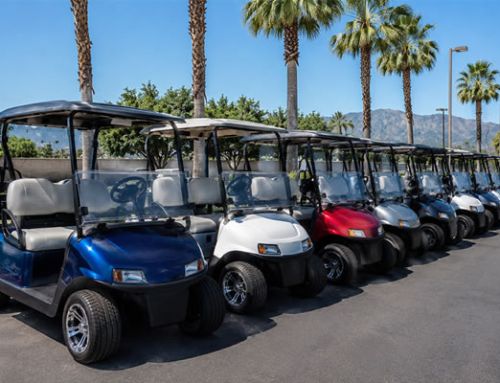
Who needs to move, how many at a time, and how far? This covers everything from maintenance crews traveling between work zones to guests or patrons being transported across a large venue or property. If your operation involves moving groups — particularly individuals with mobility challenges who need reliable transport across a large footprint — the vehicle count and configuration for this task needs to be worked out separately from your cargo and logistics needs. A 6-passenger shuttle unit serves a different function than a 2-person utility cart, and both may be necessary depending on your operation.
Cargo and Material Handling
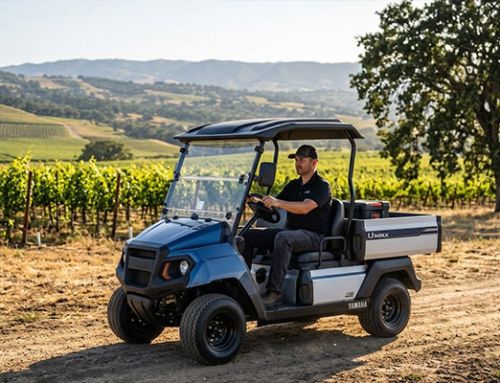
What gets moved, how heavy, and how often? A maintenance department that transports tools and equipment multiple times per day has different cargo requirements than a winery that primarily needs the vehicle for harvest logistics a few months per year. Understanding the weight, frequency, and type of cargo movement your property generates helps determine whether standard utility bed configurations are sufficient or whether purpose-built commercial platforms with higher load ratings — like those in the Yamaha UMAX line — are the right fit. Our post on the Yamaha UMAX commercial utility vehicles covers what that platform offers for heavy commercial cargo applications specifically.
Terrain and Operating Environment
Flat, paved surfaces and rough, uneven terrain place very different demands on vehicle suspension, ground clearance, and drivetrain durability. A vehicle that performs well on a smooth commercial campus may not hold up on a working agricultural property or an event venue with variable ground conditions. Be honest about what your terrain actually looks like — not just the main paths, but the areas the vehicle will realistically access during operations. This affects both the platform type you need and the suspension specification that’s appropriate for your conditions.
Operating Hours and Daily Cycle Demands
How many hours per day will the fleet run, and what does a typical operational day look like? A vehicle that makes light, intermittent trips over a long day has a very different energy demand profile than one covering significant ground under load in a condensed operational window. Understanding daily cycle demands matters both for sizing the fleet correctly and for planning the charging infrastructure that supports it — which we’ll address in the next section.
Charging and Infrastructure: The Question That Gets Overlooked
In our experience, charging infrastructure is the fleet planning element that commercial buyers are most likely to underestimate — and the one that creates the most operational friction when it hasn’t been thought through properly before purchase. An electric fleet that can’t be reliably charged and ready for each day’s operation isn’t functioning at its potential, regardless of how well the vehicles themselves are suited to the work.
Where Will Vehicles Be Charged?
This sounds obvious, but the answer involves more than identifying a shed or parking area. It means confirming that adequate electrical capacity is available at the charging location, that outlets are accessible and correctly configured for the charger types your vehicles require, and that the physical space can accommodate the number of vehicles being charged simultaneously. Properties that are adding a fleet for the first time sometimes discover that their existing electrical infrastructure needs upgrading to support overnight fleet charging — a cost that’s worth identifying before purchase rather than after.
Overnight vs. Opportunity Charging
Overnight charging — plugging vehicles in at the end of the operational day and letting them charge fully before the next morning — is the most straightforward charging strategy for most commercial operations and the one that’s easiest on battery longevity. It works well when operational hours are predictable and vehicles have adequate range for a full day’s work between charges.
Opportunity charging — topping vehicles up during breaks or between shifts throughout the day — is worth planning for when operational demands are high or vehicle range relative to daily usage is tighter than ideal. Lithium battery systems are better suited to opportunity charging than lead-acid, which is one of the practical operational advantages lithium offers for high-demand commercial fleets. If your fleet will be running hard throughout the day with limited downtime windows, it’s worth factoring battery chemistry into your purchase decision alongside vehicle platform and configuration.
Sacramento’s Climate and Charging Timing
For operators in the Sacramento and Central Valley area, summer charging conditions add a layer to this planning. Charging batteries immediately after heavy use in high ambient heat is harder on battery systems than charging during cooler overnight hours. Wherever your operation allows for it, building overnight or early-morning charging into your routine during summer months extends battery life meaningfully over time. This is a simple operational practice, but it’s worth establishing from the start rather than discovering through accelerated battery wear a few seasons in.
Planning for Growth and Seasonal Flexibility
A fleet that’s sized precisely for today’s operation may be undersized within a season or two if the property grows, operational demands increase, or new uses for utility vehicles emerge that weren’t anticipated in the original planning. Building some flexibility into the initial fleet plan — either by purchasing slightly ahead of current needs or by establishing a clear path for fleet expansion — tends to produce better long-term outcomes than sizing tightly to current requirements.
For properties with significant seasonal variation in demand, it’s also worth thinking through whether the core owned fleet should be supplemented with rental vehicles during peak periods rather than sized to the peak and underutilized through the rest of the year. Our posts on seasonal fleet rentals and temporary fleet deployment cover those options in detail for operators where that model makes sense.
Consider Starting with a Rental to Validate Your Assumptions
For operators who are new to commercial utility vehicle fleets — or expanding into a new property type where usage patterns aren’t yet well established — there’s real value in using a short-term or seasonal rental period to validate the fleet planning assumptions before committing to a purchase. A rental engagement tells you things a planning exercise on paper can’t: which vehicle types actually get used most, where the gaps in the configuration are, and whether the fleet size feels adequate or consistently strained under real operational conditions.
That information produces a much better-informed purchase decision. We’ve worked with commercial buyers who came to us after a rental period with a clearer and more confident sense of exactly what they needed — and the purchases they made matched their operations well as a result. If your situation has that kind of uncertainty in it, the rental path is worth considering as a planning step, not just a budget alternative to ownership.
Working Through the Decision Together
Fleet planning for a commercial property involves enough variables — operational needs, terrain, budget, infrastructure, growth trajectory — that a conversation tends to produce better outcomes than an independent online research process. Our commercial team at Gilchrist has worked through this process with a wide range of property types and operational profiles throughout Sacramento and Placer County, and we’re genuinely glad to be a resource for operators who are early in their planning rather than just waiting to close a sale at the end of it.
If you’d like to explore available new and refurbished commercial inventory while working through your fleet plan, visit our golf cars for sale page or reach out to our team directly to start a conversation. And if you’d like to request pricing on specific configurations once your requirements are clearer, our quote request page is a straightforward starting point.
Gilchrist Golf Cars
1140 Tara Ct., Rocklin, CA 95765
916-652-9078
sales@gilchristgolfcars.com
Golf Cars for Sale | Request a Quote