
Monthly Golf Cart Rental Makes Sense
When a business or organization needs reliable transportation across a large property, the answer isn’t always a full vehicle purchase. For many commercial applications, a monthly golf cart rental offers exactly the right balance of flexibility, cost efficiency, and practicality. Whether the need is temporary, seasonal, or project-based, a long-term rental can be up and running quickly, without the commitment of ownership. Here’s a look at who benefits most from monthly golf cart rentals, and why the economics often make more sense than you might expect.
Who Is a Long-Term Golf Cart Rental Right For?
Monthly rentals are purpose-built for situations where the need for a golf cart is real and ongoing, but not necessarily permanent. The following industries and applications are among the most common and most practical fits.
Security Providers at Commercial Properties
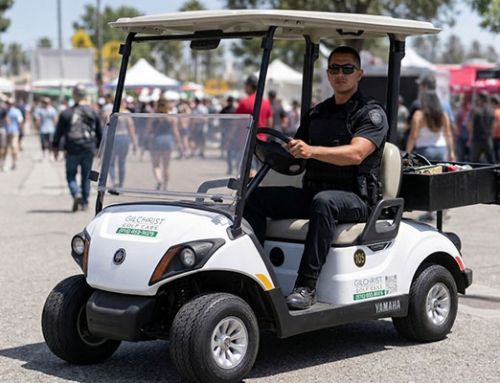
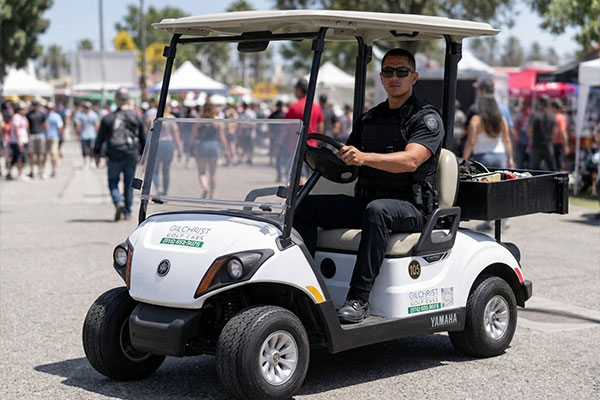
Security companies patrolling large commercial properties, including shopping centers, parking lots, manufacturing plants, warehouses, and distribution facilities, often face a challenge that a standard patrol vehicle doesn’t solve well: the property is too spread out to cover efficiently on foot, but too confined or pedestrian-heavy for a full-size automobile. A golf cart fills that gap precisely.
Because security contracts are finite, tied to a client agreement that may last months or a few years, ownership of patrol vehicles doesn’t always make financial sense. A monthly rental allows the security provider to right-size their fleet to the contract, return the units when the engagement ends, and avoid carrying depreciating assets between jobs. For companies managing multiple contracts simultaneously, rentals also allow the fleet to scale up or down as needed.
Home Developers and Builders
Active construction sites present a unique transportation challenge. Clients touring a development in progress, project managers moving between phases of a large build, and staff coordinating across wide lots all benefit from a reliable, low-speed vehicle that can navigate graded terrain and tight spaces. A golf cart is often the most practical option available.
For homebuilders, the rental model aligns naturally with the project lifecycle. The cart is put to work when the development is active and returned when the project wraps or transitions to the next phase. For builders managing multiple developments, a single rental agreement can be structured to move with the work.
Facilities with Large Indoor or Outdoor Footprints
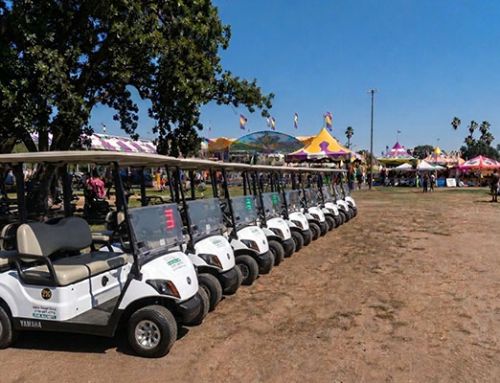
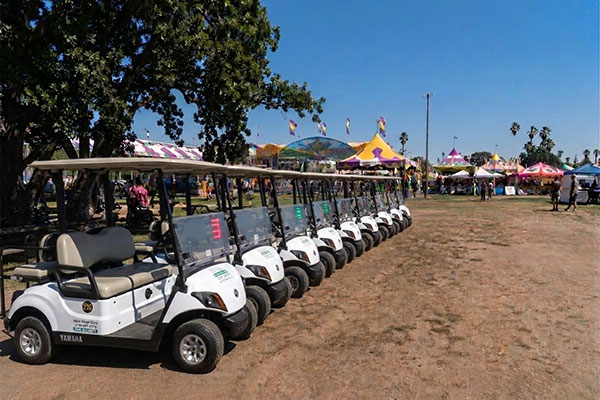
Any commercial environment where employees or customers need to cover significant distances, and where a full automobile isn’t practical, is a strong candidate for a monthly golf cart rental. Distribution centers, fairgrounds, resorts, convention facilities, and large institutional campuses all fit this description. When staff members are spending meaningful time walking from point A to point B, a golf cart doesn’t just add convenience; it reclaims productive work hours and reduces physical fatigue over a long shift.
Seasonal Agricultural and Recreational Businesses
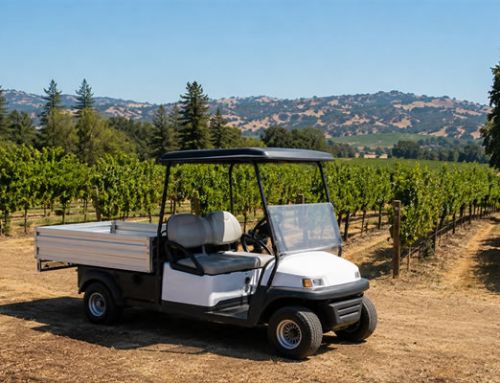
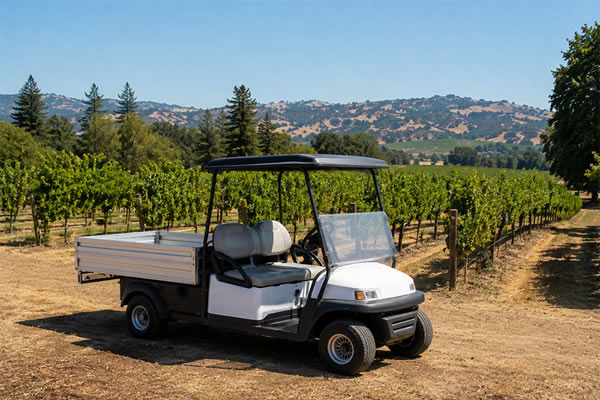
Orchards, farms, vineyards, summer camps, and seasonal recreational businesses often have a predictable window during which a golf cart is essential, and a longer period during which it would simply sit idle. Monthly rentals are an ideal match for this pattern. The rental can be brought on at the start of the busy season, used intensively, and returned when operations wind down. There’s no off-season storage to manage, no winterization, and no carrying costs between uses.
The Business Case: Why Renting Often Makes More Financial Sense Than Buying
The question of rent versus purchase is worth thinking through carefully. For many businesses, the math favors renting, particularly when the need has a defined end point or varies by season.
A new golf cart represents a capital outlay, an ongoing maintenance responsibility, and an asset that depreciates over time. If the cart sits unused for several months of the year, or if the business wraps up the project that required it, the ownership model creates cost and logistical burden with no corresponding return. A monthly rental converts that fixed cost into a variable one; you pay for what you use, and when the need ends, so does the expense.
There’s also a productivity argument. When people who should be working are instead walking long distances across a large property, that time has a real cost. Even a modest improvement in how efficiently staff can move across a site can offset a monthly rental fee quickly, particularly at properties where movement is constant throughout the workday.
Choosing the Right Model for the Job
Not every rental application calls for the same cart. Gilchrist Golf Cars maintains one of the largest rental fleets in the greater Sacramento area, with a variety of configurations available for different commercial needs:
- 4-passenger and 6-passenger models are well suited for transporting clients, guests, or customers across a property. These are ideal for builders hosting site tours, resorts moving guests between facilities, or event venues managing large crowds.
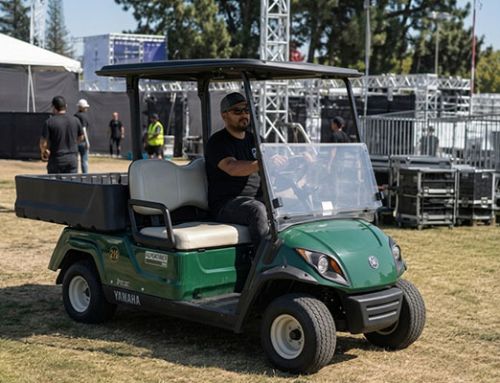
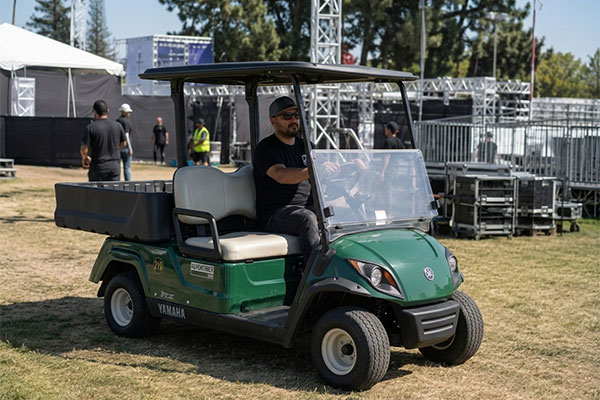
- Cargo box and utility models are designed for operations where staff need to carry tools, supplies, or equipment while moving across a site. These significantly improve efficiency for maintenance crews, facilities teams, and agricultural workers.
- 2-passenger models are a natural fit for security patrols, where a compact, maneuverable vehicle and a minimal footprint are both priorities.
- Flatbed models are available for heavier hauling needs, with a 6-foot flatbed suited for materials transport in construction or agricultural settings.
Both gas-powered and electric options are available. Electric models, particularly lithium units, are well suited for indoor use or facilities with overnight charging capability. Gas models offer extended range and continuous use without a recharge cycle, making them a better choice for high-demand applications or long operating hours.
How the Rental Process Works
Getting started with a monthly rental from Gilchrist Golf Cars is straightforward. Rentals are delivered via truck and trailer to your location throughout Sacramento and Placer Counties, or units can be picked up and returned directly at the Rocklin showroom. Delivery pricing is based on location and quantity, and is provided once a reservation request is submitted.
One requirement worth noting upfront: all rentals require a certificate of general liability insurance naming Gilchrist Golf Cars as an additional insured. The minimum coverage is $1,000,000. If you don’t already have this in place, your insurance broker can typically arrange it quickly; Gilchrist can also provide a referral to an event rental liability insurance provider upon request. Getting this sorted early in the process keeps things moving smoothly once availability and delivery details are confirmed.
Reservation requests are reviewed within 24 hours. For any time-sensitive needs, calling the showroom directly is always an option.
Ready to Put a Golf Cart to Work for Your Business?
If your operation covers a large area and getting from point to point is a daily reality for your staff or clients, a monthly golf cart rental from Gilchrist Golf Cars is worth a closer look. With a wide range of models available and delivery throughout Sacramento and Placer Counties, it’s easy to find the right fit for the job. To discuss your specific needs or get the rental process started, call (916) 652-9078, email rentals@gilchristgolfcars.com, or submit an inquiry online. Gilchrist Golf Cars has served the greater Sacramento area since 2004 and is ready to put the right vehicle to work for you.