
Golf Cart Service Isn’t One-Size-Fits-All
The golf cart market has changed dramatically over the past decade. Where consumers once chose from a handful of established brands with predictable service needs, today’s market includes a wide and growing variety of manufacturers, battery technologies, and model generations, each with its own requirements. For golf cart owners in the greater Sacramento area, that variety makes choosing the right service provider more important than ever. A provider worth trusting will understand the specifics of your cart, including its battery type, manufacturer, and model year, and tailor golf cart service to match. That’s the approach the service team at Gilchrist Golf Cars brings to every cart that comes through the door.
Why Golf Cart Service Has Become More Complex
Not long ago, most golf carts fell into a fairly predictable category: lead-acid batteries, a small number of established manufacturers, and service intervals that were relatively uniform across the market. That’s no longer the case. Three major variables now shape what any given cart needs from a service standpoint: battery technology, manufacturer, and model year. Understanding how each of these factors affects your cart is the first step toward keeping it running well and managing the cost of ownership over time.
Lead-Acid vs. Lithium: How Battery Technology Affects Service Needs
One of the most significant shifts in the consumer golf cart market over the past several years has been the transition from lead-acid to lithium battery systems. That shift has real implications for service requirements and long-term ownership costs.
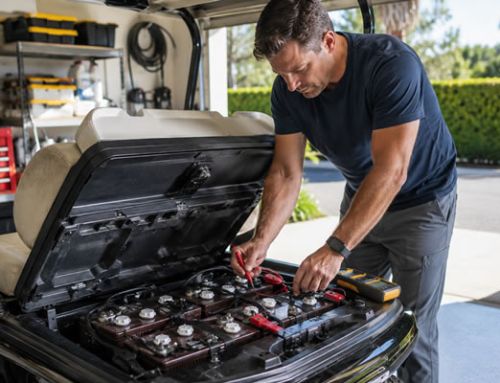
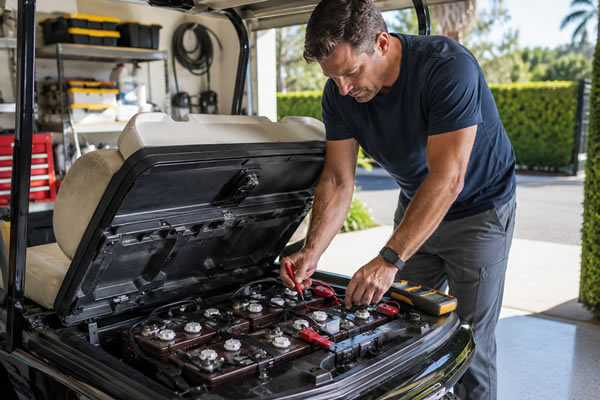
Lead-acid battery systems require regular hands-on attention. Water levels need to be checked and maintained, connections are prone to corrosion, and the batteries themselves have a finite service life that requires careful monitoring. For owners of lead-acid carts, consistent preventative maintenance isn’t optional; it’s what keeps the system healthy and prevents avoidable failures.
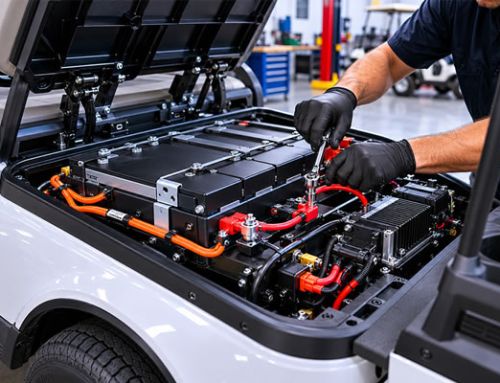
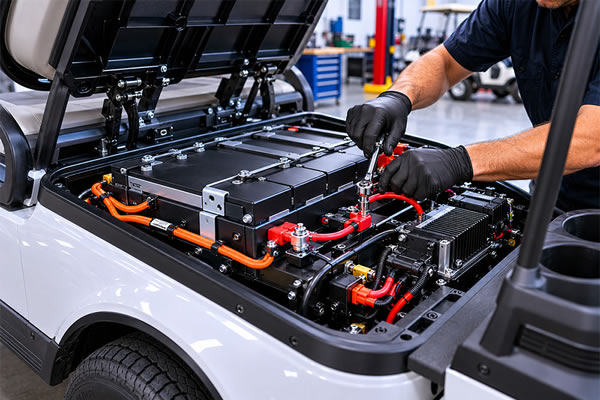
Lithium battery systems change the equation considerably. Lithium batteries are sealed, maintenance-free, and significantly more durable under regular use. They charge faster, weigh less, and carry longer warranties than their lead-acid counterparts. As more consumers make the switch to lithium, the frequency and scope of required professional service decreases accordingly. That translates to fewer service appointments and lower ongoing costs over the life of the cart.
This is one area where Gilchrist Golf Cars tailors service specifically to what the cart actually needs. A lithium cart on a light residential use schedule may only need a professional service interval every 18 months or longer. A lead-acid cart with regular use will benefit from annual service at a minimum. Applying the same schedule to both doesn’t serve the owner well, and it doesn’t reflect how these systems actually perform.
Why the Manufacturer Matters
The golf cart industry has seen an influx of manufacturers over the past decade, ranging from long-established brands to newer and lesser-known entrants. The manufacturer behind your cart has a direct impact on how well it can be serviced, and for how long.
Established brands like Yamaha, MadJax, Club Car, and EZGO have built strong dealer and parts support networks over many years. These manufacturers generally stand behind their vehicles with reliable warranty programs and consistent parts availability, which makes servicing them more predictable and cost-effective for the owner. That said, even within this group, support levels vary by brand and continue to evolve as product lines are updated.
Newer or less established manufacturers present a different challenge. Parts availability can be limited or inconsistent, warranty support may be difficult to access, and service documentation is sometimes sparse. For owners of carts from these manufacturers, working with an experienced service provider becomes even more important, because diagnosing and sourcing what’s needed requires broader technical knowledge and more creative problem-solving.
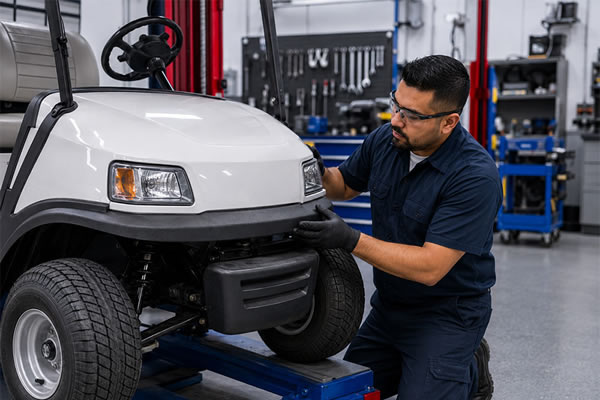
Gilchrist Golf Cars employs five factory-trained technicians with over 75 years of combined technical experience across the team. That depth of knowledge matters when a cart comes in from a brand with limited support infrastructure, and it means owners aren’t left without options simply because their manufacturer isn’t a household name in the industry.
Model Year Makes a Difference Too
Innovation in the golf cart industry has accelerated sharply since 2020. Newer models incorporate advances in motor efficiency, battery management systems, onboard electronics, and overall build quality that older models simply don’t have. As a result, newer carts generally require less frequent service than older ones, and when service is needed, the nature of the work often differs significantly.
An older cart with aging mechanical components, a worn battery pack, or outdated electrical systems may need more frequent attention and a broader scope of work at each service visit. A current-model cart fresh off its first year of use will have a very different service profile. Treating both the same way, whether by applying identical intervals or identical pricing, doesn’t reflect the actual work involved or the actual needs of the owner.
This is another area where Gilchrist’s approach to tailored service provides real value. Service intervals and scope are matched to the actual make, model, year, and usage pattern of the cart, rather than applied from a generic template.
Mobile Service for Added Convenience
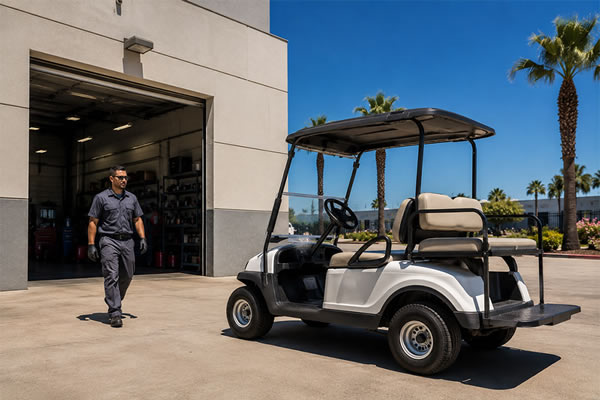
For owners who can’t easily transport their cart to the Rocklin service center, Gilchrist Golf Cars offers mobile service throughout Sacramento and Placer Counties. Mobile service trucks are equipped to handle both preventative maintenance and common repairs on-site, whether at a private residence, a gated community, a golf course, or a commercial facility.
The same factory-trained technicians and quality standards that apply in the shop apply in the field. For many residential owners, mobile service is simply more practical, and it eliminates the logistics of loading and hauling a cart for a routine maintenance visit.
What a Service Visit Covers
Whether a cart comes into the Rocklin shop or a mobile technician comes to you, a Gilchrist service visit is built around a thorough assessment of the cart’s current condition and what it needs going forward. For most carts, annual preventative maintenance covers a multi-point inspection, battery system evaluation, charging system check, brake inspection, tire and wheel review, and a look at all key mechanical and electrical components.
For owners who prefer to handle some routine maintenance themselves, the service team is also happy to provide guidance on what can reasonably be done at home and what warrants professional attention. The goal isn’t to generate unnecessary service visits; it’s to make sure every cart gets what it actually needs to perform reliably and last as long as possible.
For commercial customers and fleet operators, Gilchrist also offers customized maintenance programs built around the specific demands of the application, with priority scheduling and dedicated support to minimize downtime.
Schedule Service for Your Golf Cart
Whether your cart is a newer lithium model due for its first professional checkup, an older lead-acid cart that’s overdue for attention, or anything in between, the service team at Gilchrist Golf Cars can assess what it needs and build a maintenance plan around it. Serving Rocklin, Roseville, Lincoln, Auburn, Folsom, Sacramento, and the surrounding area, with mobile service available throughout Sacramento and Placer Counties. To schedule an appointment or ask a question about your cart, call (916) 652-9078, email service@gilchristgolfcars.com, or submit a service request online.