
5 Essential Maintenance Tips to Keep Your Yamaha Golf Car Running Like New
A Yamaha golf car is a well-built machine, and with reasonable care it should give you many years of reliable performance. The owners and fleet operators who get the most out of their vehicles — the ones who rarely deal with unexpected repairs or premature part replacements — tend to share one common habit: they take maintenance seriously before problems appear, not after.
That sounds straightforward, but in practice, maintenance is the first thing that gets skipped when schedules get busy or a vehicle seems to be running fine. At Gilchrist Golf Cars, we see the results of deferred maintenance regularly in our Rocklin service shop, and the pattern is consistent. Vehicles that come in for routine care stay reliable. Vehicles that only come in when something is wrong tend to need more involved — and more costly — repairs. This post covers the five maintenance habits that make the most difference for Yamaha golf car owners, whether you’re caring for a single personal vehicle or managing a commercial fleet.
Tip 1: Keep Battery Terminals Clean and Corrosion-Free
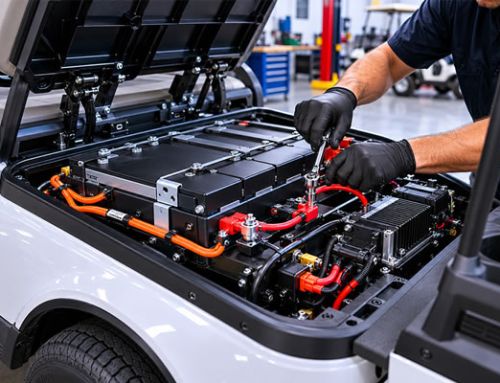
Battery terminal corrosion is one of the most common and most overlooked maintenance issues we see. The white or bluish-green buildup that forms on battery terminals over time isn’t just cosmetic — it creates resistance in the electrical connection between the battery and the rest of the vehicle’s system. That resistance reduces efficiency, can cause erratic performance, and accelerates battery wear if left unaddressed.
Cleaning terminals is a simple process: disconnect the cables, clean the terminals and cable ends with a terminal brush or a baking soda and water solution to neutralize the corrosion, rinse and dry thoroughly, reconnect, and apply a light coat of terminal protector spray or dielectric grease to slow future buildup. How often you need to do this depends on your operating environment and battery type, but checking terminals every few months is a reasonable baseline for most owners. If you’re seeing heavy buildup developing quickly, that can sometimes indicate a battery that’s venting more than it should — worth mentioning to our service team when you bring the vehicle in.
Tip 2: Monitor Tire Pressure Consistently
Tire pressure is the maintenance item that’s easiest to check and most frequently ignored. Underinflated tires increase rolling resistance, which puts more demand on the battery and reduces your range on a charge. They also wear unevenly, creating a tire replacement expense that correct inflation would have extended. Overinflated tires reduce traction and make the ride harsher than it needs to be.
Check your Yamaha’s owner’s manual for the correct pressure specification for your model and tire size, and check it with a quality gauge — not just a visual assessment. For most owners, a monthly check is sufficient under normal conditions. If your vehicle operates on rough terrain, carries heavy loads regularly, or spends significant time in the summer heat, check more frequently. Tire pressure rises with temperature, so a tire that’s correctly inflated on a cool morning may be overinflated by afternoon during a Sacramento summer. We’ll touch more on summer-specific considerations a bit further down.
Tip 3: Inspect Cables and Electrical Connections
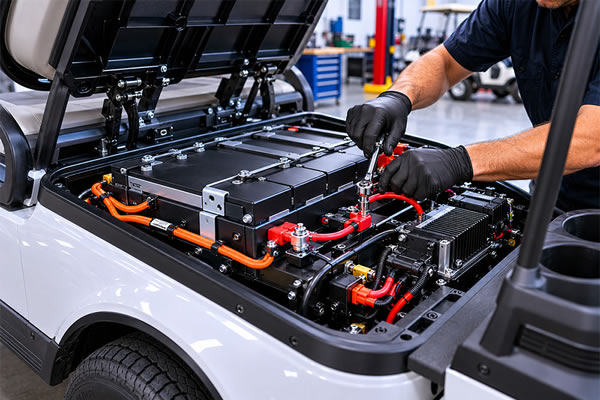
Golf cars operate in environments that aren’t always gentle on wiring — dust, moisture, vibration, and temperature swings all contribute to wear on cables and connections over time. A periodic visual inspection of the main battery cables, motor connections, and controller wiring costs nothing and can catch problems early that would otherwise go unnoticed until they cause a failure in the field.
What to look for: fraying or cracking in cable insulation, loose or corroded connection points, cables that have shifted out of their routing and are rubbing against moving components, and any signs of heat discoloration around connection points, which can indicate a connection that’s working harder than it should due to resistance. If you spot anything that looks worn or questionable, don’t try to repair high-voltage connections yourself — bring the vehicle to our service team and let a trained technician handle it safely and correctly.
Tip 4: Clean and Adjust Brakes on a Regular Schedule
Golf car brake drums accumulate dust, debris, and moisture over time, which affects braking performance and accelerates wear on the brake shoes. Periodic brake cleaning — blowing out the drums and inspecting the shoes for wear — is a straightforward service item that’s easy to incorporate into a seasonal maintenance routine. Cable-actuated brake systems also require periodic adjustment as cables stretch with use, and a brake that’s slightly out of adjustment today will be noticeably off in another season if left alone.
For fleet operators, we’d strongly recommend putting brakes on a documented inspection schedule rather than checking them reactively. Brake performance is a safety issue, and on a vehicle operating around staff, guests, or patrons, it’s not an area where deferred maintenance is acceptable. Our service team can establish a maintenance schedule for your fleet that keeps brakes — and everything else — in proper working order throughout the year.
Tip 5: Stay Current on Fluid Checks for Applicable Models
Electric Yamaha models have a simpler fluid picture than gas-powered vehicles, but fluid maintenance still applies where it’s relevant — transaxle and differential fluid on models where those components are present, and brake fluid on vehicles equipped with hydraulic braking systems. Gas-powered Yamaha models require oil changes and coolant checks on a regular schedule.
Consult your owner’s manual for the specific fluid requirements and service intervals for your model. If you’re not sure what applies to your vehicle or when the last service was performed, bring it in and we’ll do a full evaluation. Fluid-related failures — a seized transaxle, for example — tend to be expensive repairs that proper maintenance intervals would have prevented entirely.
Sacramento’s Climate Adds a Layer to Every One of These
Owning and operating a golf car in the Sacramento area means dealing with one of the more demanding climates for vehicle maintenance in California. Summers here are genuinely hot — temperatures regularly exceed 100°F in the Central Valley — and that heat accelerates nearly every maintenance-related wear process we’ve described above.
Lead-acid batteries lose water faster in high heat, which makes the fluid level checks and terminal cleaning described above more critical during summer months. Tire pressure climbs with temperature, making more frequent monitoring important. Electrical connections and cable insulation face greater thermal stress. And vehicles that spend extended time in direct sun while parked absorb heat that affects battery charge levels and overall system performance.
We cover Sacramento-specific summer service considerations in more detail in our post on common golf cart repair issues we see during Sacramento summers, which is worth reading if your vehicle gets heavy summer use. And if your battery system is showing signs of heat-related wear, our post on lithium versus lead-acid battery upgrades outlines why some owners in this climate find that lithium technology holds up significantly better through the summer months.
When DIY Maintenance Has Its Limits
The five items above are all things a reasonably capable owner can manage with some attention and basic tools. But there’s a meaningful difference between routine maintenance and diagnostic service — and it’s a distinction worth respecting. Factory-trained Yamaha technicians have access to model-specific diagnostic tools, technical service bulletins, and the hands-on experience of working on these vehicles every day. When something isn’t performing right and you’re not sure why, a professional diagnosis is almost always more efficient and accurate than working through it yourself by trial and error.
We also see vehicles come in where well-intentioned DIY repairs created additional problems — incorrect parts, improper torque specs on suspension components, or electrical connections that weren’t properly insulated. Routine maintenance is absolutely worth doing yourself. When it crosses into repair territory, particularly on electrical systems or safety-related components, the value of a trained technician is real.
If you’d like to know more about what warning signs indicate your vehicle needs professional attention beyond routine maintenance, our post on 5 signs your golf cart needs a professional tune-up is a good companion read to this one.
To schedule a seasonal service check or discuss a maintenance plan for your vehicle or fleet, reach out to our team in Rocklin.
Gilchrist Golf Cars
1140 Tara Ct., Rocklin, CA 95765
916-652-9078
sales@gilchristgolfcars.com
Service & Repair — Rocklin, CA