
Golf Cart Repair in Rocklin: Common Problems We See During Sacramento Summers
Every year, as the Sacramento Valley moves into summer, our service schedule at Gilchrist Golf Cars starts to reflect it. The mix of vehicles coming through our Rocklin shop shifts in a predictable way — battery issues climb, electrical complaints increase, and we start seeing the wear patterns that Central Valley heat creates on vehicles that have been running through the spring without much attention paid to how the coming months will stress them.
We’ve been servicing golf cars in this region long enough to know what Sacramento summers do to these vehicles. The combination of sustained high temperatures, intense direct sun, and the heavy operational demands that summer events and commercial activities place on fleets creates a specific set of problems that we see year after year. This post is about what those problems actually look like, what causes them, and — more importantly — what you can do before summer peaks to avoid being on the wrong end of them.
What Sacramento’s Summer Climate Actually Does to Golf Cars
It helps to understand why our climate is particularly demanding on electric vehicles before getting into the specific issues. The Sacramento Valley regularly sees sustained temperatures above 100°F from June through September, with heat indexes that push even higher in direct sun. Golf cars operate outdoors, often parked in full sun between uses, and frequently driven during the hottest parts of the day. That’s a meaningful amount of thermal stress on batteries, electronics, and rubber components that simply doesn’t exist in more moderate climates.
A golf car that’s been well maintained through a mild spring can still run into summer-specific problems if no one has prepared it for the conditions ahead. Here’s what we see most consistently.
Battery Performance Degradation and Heat-Related Failure
This is the most common summer service issue we deal with, and it’s also the one that tends to surprise owners the most — because it often feels like the battery failed suddenly when in reality the heat simply accelerated a decline that was already underway.
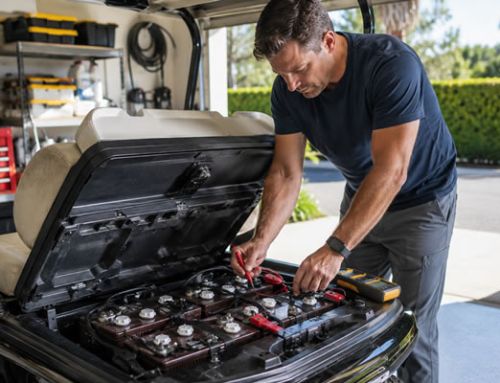
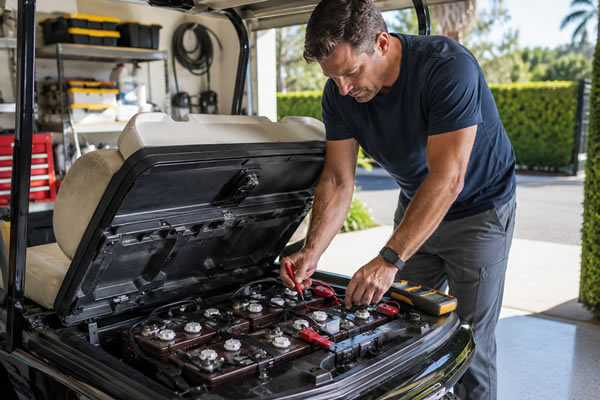
Lead-acid batteries are sensitive to heat in several ways. High ambient temperatures accelerate the evaporation of electrolyte fluid from the cells, which — if not replenished — causes permanent plate damage. Heat also speeds up the internal chemical reactions within the battery, which sounds beneficial but in practice increases self-discharge rates and contributes to accelerated aging. A battery that might have given another full season of reliable performance in a cooler climate can hit its limit mid-summer in Sacramento.
What this looks like from the operator’s perspective is a cart that suddenly seems to have lost significant range, or that struggles through the second half of a day that it would have handled without issue a few months earlier. By the time those symptoms are obvious, the battery has usually been under heat stress for weeks. Bringing a vehicle in for a battery evaluation in April or early May — before temperatures climb — gives us the opportunity to identify a weakening pack and address it before summer demands expose it completely.
For fleet operators running vehicles through peak summer events, this timing matters significantly. A battery that fails during an active event day is a disruption that a pre-season service visit would have prevented. If you’re weighing whether your fleet’s batteries have another summer in them or whether it’s time to consider a lithium conversion, our post on lithium versus lead-acid battery upgrades walks through how lithium technology handles heat stress differently — and why a growing number of our customers in this region are making the switch.
Electrical System Stress and Controller Issues
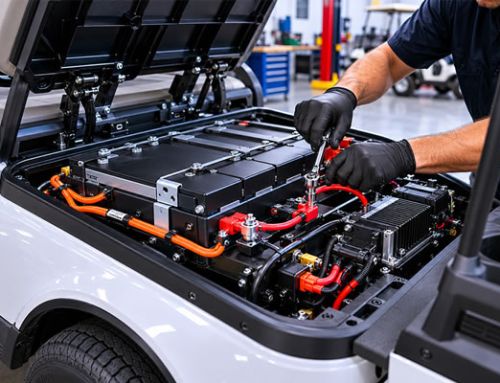
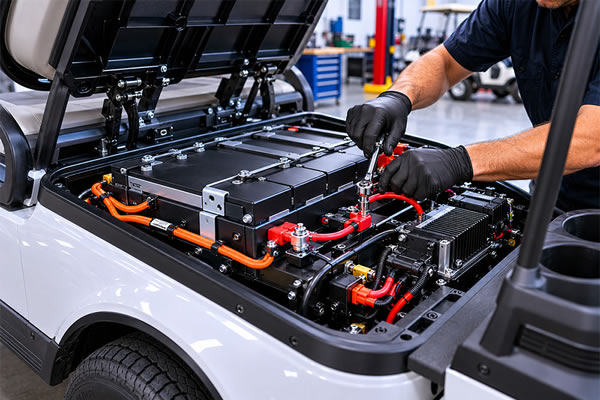
Heat is hard on electronics, and golf car electrical systems are no exception. Controllers, solenoids, and wiring all operate under greater thermal stress during Sacramento summers, particularly on vehicles that spend long hours in direct sun. Wiring insulation becomes more brittle with repeated heat exposure over multiple seasons. Connection points that are marginal during cooler months can become intermittent or fail entirely when operating temperatures climb.
We see controller issues increase noticeably during summer — erratic behavior, hesitation, unexpected shutdowns — that often trace back to a combination of heat stress and connections that needed attention but weren’t flagged during the cooler months when they were performing adequately. A pre-summer electrical inspection that checks connection integrity, looks for insulation wear, and confirms the controller is operating within normal parameters can identify these issues before they become mid-season failures.
Tire Wear and Pressure Management
Heat affects tire behavior in two distinct ways that both matter for summer operation. First, tire pressure rises with temperature — a tire inflated correctly on a cool morning can be meaningfully overinflated by early afternoon on a hot day. Chronically overinflated tires wear in the center of the tread, reduce traction, and create a harsher ride. Second, sustained heat exposure accelerates rubber degradation over time, making cracks and sidewall wear develop faster on tires that are already a few seasons old.
We recommend checking tire pressure more frequently during summer months than you might during spring or fall, and doing so earlier in the day when temperatures are more moderate. If you’re seeing uneven wear patterns or sidewall cracking on tires that aren’t particularly old, the Sacramento climate may be accelerating their aging — bring the vehicle in and we’ll take a look.
Charging Inefficiency in High Heat
One aspect of summer operation that doesn’t get discussed as often as it should is how heat affects the charging process itself. Batteries — particularly lead-acid — charge less efficiently when they’re hot. A vehicle that’s been running hard in 105-degree heat and then gets plugged in immediately afterward isn’t accepting that charge as effectively as a vehicle that’s been allowed to cool down first.
Charging a hot battery also generates more heat within the cells, which compounds the thermal stress that summer operating conditions are already creating. Where possible, we recommend allowing vehicles to rest in a shaded or cooler location before charging during the hottest months, and running charging cycles overnight when ambient temperatures are lower. It’s a simple operational adjustment that makes a genuine difference in battery health over a summer season. We cover this and related battery care practices in more detail in our post on extending golf cart battery life during Sacramento summers.
The Value of Working with a Local Service Team
We’ve had customers come to us after working with service providers who weren’t familiar with what Sacramento summers specifically demand of golf car electrical and battery systems. The advice that works in a more moderate climate doesn’t always translate here. When a technician has spent years watching how Central Valley heat affects these vehicles across hundreds of service visits, the diagnostic process looks different — because the patterns are familiar in a way that general golf car service knowledge doesn’t fully capture.
Our team in Rocklin services vehicles that operate in this climate every day. We know the seasonal patterns, we anticipate the issues that summer reliably brings, and we can make recommendations based on how vehicles actually perform in this region rather than on general guidelines written for a broader market.
If your vehicle — or your fleet — hasn’t had a pre-summer service visit, there’s still time to get ahead of the season’s demands. And if you’ve been experiencing issues that started with or worsened during the warmer months, reach out and let us take a look. For additional guidance on what to watch for year-round, our posts on signs your golf cart needs a tune-up and essential Yamaha maintenance tips are good companion reads to this one.
Gilchrist Golf Cars
1140 Tara Ct., Rocklin, CA 95765
916-652-9078
sales@gilchristgolfcars.com
Service & Repair — Rocklin, CA